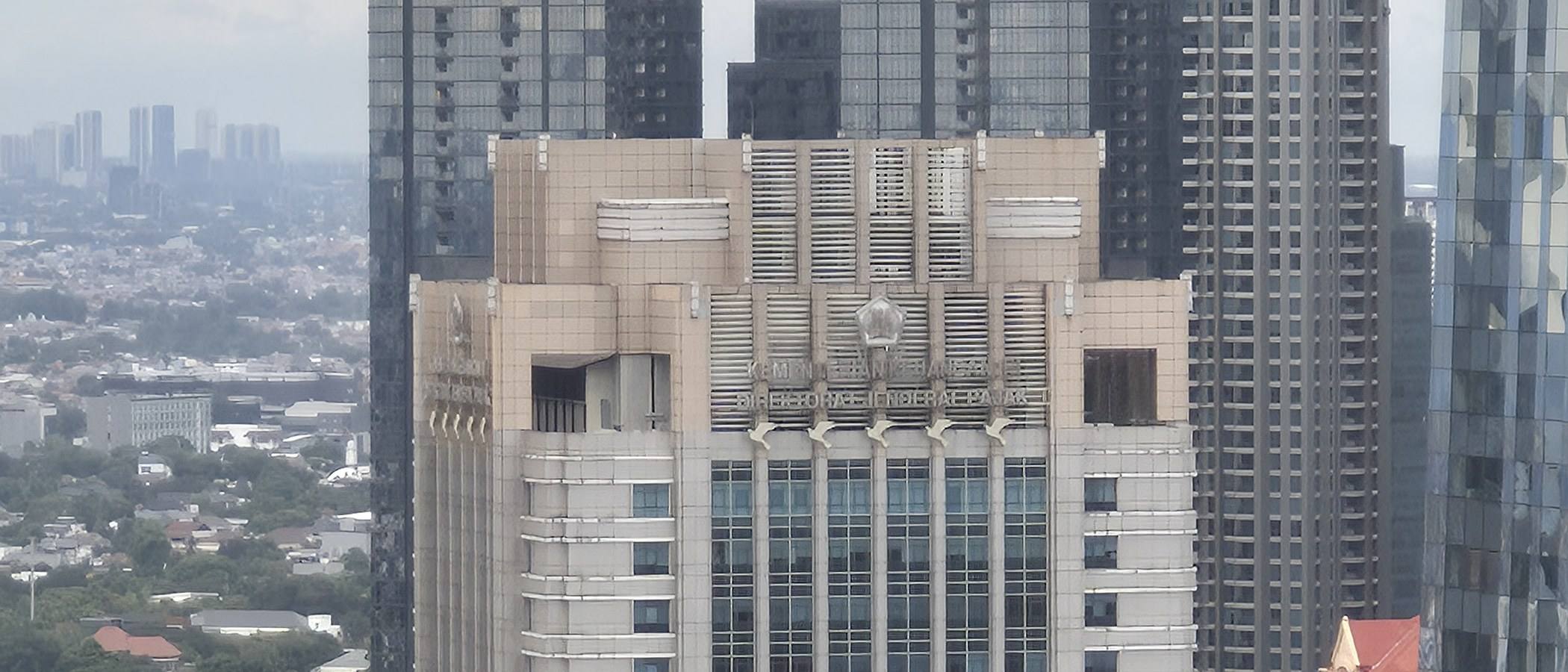
Photo: Directorate General of Taxes (DJP) headquarters, Jakarta · by Medelam · via Wikimedia Commons · CC BY-SA 4.0
This Month's Verdict
Indonesia's bite isn't in the rates — it's in the structure. Money gets withheld before you ever earn it.
Corporate income tax is 22% (China: 25%); VAT effectively runs at ~11% (China: 13%) — on the rate sheet, Indonesia wins across the board. That is an illusion. The real difference is structural: withholding tax reaches into every payment for services, rent, interest and dividends — you withhold for the tax office at the moment you pay; restaurant spending skips VAT entirely and pays a separate 10% local tax (PBJT — 40% for entertainment venues); and under Coretax real-time clearance, “invoice can't be issued” means “business can't be done”. Apply Chinese experience directly, and you will misprice everything.
Three Numbers
20%→10%
So what: profit repatriation is the single most mis-computed line for Chinese entrants. Dividend withholding defaults to 20%; used correctly, the China–Indonesia treaty (P3B) cuts it to 10% — that's RMB 100k saved per million repatriated. But PMK 112/2025 (effective Dec 30, 2025) sets the toughest procedure ever: file the DGT certificate of domicile before payment, hold shares for 365 days, and pass beneficial-owner review. Miss any one, and you are chased for the full 20% plus interest.
So what: monthly filing is a hard routine — pay last month's taxes by the 15th, file via Coretax by the 20th; invoices not uploaded by the 20th of the following month lose their input-VAT credit. The 15th–20th is the finance team's fixed battle window, and payment approvals must reserve time for withholding. This cost cannot be skipped: a local accountant plus a licensed tax adviser runs roughly RMB 20k–50k a year for a small entity.
Sources: DJP filing calendar; compiled by Equator Creative, Sep 2026.
0.5%
Counter-evidence: Indonesia's most tempting rate — the 0.5% turnover-based final tax — has never been available to PT PMA; and since the April 2026 regulation (PP 20/2026), newly registered ordinary PTs and CVs are excluded too. It now covers only individual traders, one-person companies and qualifying cooperatives. Anyone who promises to “run your turnover at 0.5%” is planting a landmine — the realistic floor for a foreign entity is 22% CIT plus the full withholding routine.
The tax map: three collection layers, each with its own system
Indonesian tax runs in three layers: national taxes (Directorate General of Taxes, DJP — all via Coretax), regional taxes (province/city Bapenda — PBJT, PBB, BPHTB and more), and customs-stage taxes (Bea Cukai). The layers are independent and file through separate systems. The most common Chinese mistake is watching only national taxes and ignoring regional ones — restaurants that get back-billed are usually hit with PBJT.
Tax
Indonesian name
Current rate (verified Sep 2026)
Payer / withholder
Corporate income tax
PPh Badan
22%; 19% for qualifying listed companies; Art. 31E half-rate for small firms
Annual settlement
VAT
PPN
Nominal 12%, effectively 11% on most transactions (11/12 base); 12% luxury; 0% exports
PKP-registered businesses
Payroll withholding
PPh 21
Progressive 5%–35% (monthly TER tables)
Employer withholds
Domestic services/rent WHT
PPh 23
2% services; 15% dividends/interest/royalties
Payer withholds
Offshore payment WHT
PPh 26
20% default; treaty-reducible (China treaty 10%)
Payer withholds
Import income-tax prepayment
PPh 22
2.5% with API import licence; 7.5% without
Prepaid at customs
Final tax on rent/construction
PPh 4(2)
10% on land/building rent; 2.5% on property sale (seller)
Tenant withholds / seller
F&B, hotel & entertainment local tax
PBJT
Up to 10% for F&B/hotels (Jakarta 10%); 40% clubs/bars/KTV/spas
Collected from consumers
Land & building annual tax
PBB-P2
Up to 0.5% of assessed value (typically 0.1%–0.3%)
Owner, annually
Title acquisition duty
BPHTB
5% after threshold (Jakarta threshold IDR 250mn)
Buyer
Import duty
Bea Masuk
0%–150% by HS code; mostly 0% with ACFTA Form E
Importer
Stamp duty
Bea Meterai
Flat IDR 10,000 per document
Signing parties
Sources: UU HPP (No.7/2021), UU No.1/2022 (HKPD), Jakarta Perda No.1/2024, current customs practice — verified online Sep 21, 2026. For applicability to any specific transaction, rely on a licensed Indonesian tax adviser.
Seven structural differences from China (quick scan)
1. Income-tax logic: China taxes annual profit; Indonesia withholds on gross flows — cash pressure moves forward. 2. Two-layer consumption tax: central PPN plus local PBJT never offset; a restaurant pays PPN on inputs and PBJT on meals. 3. Invoicing: Coretax validates before an invoice exists — more front-loaded than China's Golden Tax. 4. Incentive logic: Indonesia rewards investment scale and pioneer industries; foreign entities get no “small-business” breaks. 5. Cross-border repatriation: 20% default, 10% by treaty, with the toughest procedure on record. 6. Employment add-ons: BPJS employer cost is only ~10%–11% (China ~25%–35%), but THR religious-holiday pay forces roughly one extra month of salary per year. 7. Global minimum tax: Indonesia has run a 15% GMT since Jan 2025 (PMK 136/2024) — group structures must be re-modelled on that premise.
Source: Equator Creative, Indonesia Tax Guide for Chinese Entrants, §02, Sep 2026.
When This Verdict Breaks
① Regulations and rates in this report are verified as of Sep 21, 2026 — Indonesian rules change fast; if personal-income brackets, BPJS bases or local Perda are adjusted, the latest official releases prevail and figures must be re-verified before execution. ② If PMK 112/2025's DGT-first filing, 365-day holding or PPT requirements are loosened or repealed, the repatriation-structure conclusions must be recomputed. ③ If Coretax's real-time clearance is rolled back or suspended in practice, the urgency of “compliance as an entry ticket” downgrades accordingly. ④ This report is a tax knowledge map, not tax or legal advice — before any specific transaction, structuring or filing, obtain a written opinion from a licensed Indonesian tax consultant (Konsultan Pajak, USKP-qualified).
Evidence & Action
Withholding tax is the soul of the system — before every payment, ask “must I withhold?”
Withholding is where Chinese firms get fined most. The three easiest traps: mixing up 2% and 15% (PPh 23 is 2% on services, 15% on dividends/interest/royalties — misclassify a payment and it's back-tax plus interest); suppliers without an NPWP tax number (the rate doubles by law, 2%→4% — adding “collect NPWP before signing” to procurement is a zero-cost control); and paying offshore without PPh 26 (20% default; to apply the 10% treaty rate you need the counterparty's DGT form before payment — pay first, file later = chased at 20%).
Creditable against annual CIT — cash-flow cost, not final
PPh 4(2)
Land/building rent (landlord's final tax)
10%
Tenant withholds — the landlord's tax, but you deduct it
PPh 4(2)
Construction services
1.75%–6%
Tiered by contractor qualification
PPh 4(2)
Property transfer (seller)
2.5% of gross price, not gain
Final — no refund, no credit
Sources: Income Tax Law Art. 17/23/26; PMK 168/2023 (TER mechanism). Verified Sep 21, 2026.
Coretax: the biggest enforcement variable of 2026 — “two sets of books” no longer has anywhere to live
The old e-Faktur system retired on Dec 31, 2025; from 2026, Coretax is the country's single tax-administration platform. Three hard changes: real-time clearance (invoices must pass DJP validation before they can be issued at all — more front-loaded than China's Golden Tax); automatic cross-matching (invoice serials are system-assigned, buyer and seller data are auto-compared, and if annual CIT revenue doesn't reconcile with PPN filings, auditors can adjust for “concealed income”); and upload deadlines (invoices uploaded after the 20th of the following month lose input credit; false invoicing can be fined up to 100% of underpaid tax with criminal exposure). Write “invoice in the month of transaction, fully uploaded by the 20th of the next” into your monthly close. It's a hard motion.
Sources: PER-11/PJ/2025; DJP announcements (e-Faktur retired Dec 31, 2025; Coretax fully mandatory from 2026). Verified Sep 21, 2026.
Profit repatriation: treaty relief is never automatic — three gates, all required
The China–Indonesia treaty cuts withholding on dividends, interest and royalties from 20% to 10% across the board. But PMK 112/2025 imposes three gates: file the DGT form before payment (the offshore recipient's certificate of domicile must be submitted via Coretax before the payment occurs); a 365-day holding period for dividends (the beneficial owner must have held the shares for 365 consecutive days before the distribution date); and beneficial ownership plus the principal-purpose test (an intermediate holding company that is merely a conduit loses treaty relief outright — Singapore/Hong Kong shell holdings are the audit priority of 2026; an intermediate layer must come with substance: office, staff, decision-making functions).
Holding route
Dividends
Interest
Royalties
Direct China parent
10%
10%
10%
Singapore interlayer
10% (≥25% holding)
10%
15%
Hong Kong interlayer
5% (≥25% holding)
10%
5%
Netherlands interlayer
5% (≥25% holding)
10%
10%
Source: DJP official P3B rate table, verified Sep 21, 2026. There is no standard answer: for a single project of limited scale, direct China holding at 10% is simple and clean; only multi-project platforms with future exit or financing plans justify an interlayer. Have a licensed tax adviser issue a written opinion on the specific structure before implementation.
One Jakarta store's annual tax bill (worked example)
Scenario: a Chinese company runs a Chinese restaurant in Jakarta through a PT PMA — annual revenue IDR 20bn (≈RMB 8.7mn at ~IDR 2,300/RMB, order-of-magnitude only), 10% net margin giving IDR 2bn taxable profit, 20 staff with IDR 150mn monthly payroll, IDR 1.2bn annual rent, and a year-end IDR 1bn dividend to the Hong Kong parent (compliant structure assumed).
Stage
Tax
Amount (IDR)
Nature
Consumption
PBJT 10%
2bn
Collected from customers — pass-through, but eats pricing headroom
Rent
PPh 4(2)
120mn
Withheld by tenant (landlord's tax, handled by you)
Staffing
BPJS employer share
~193mn/yr
Hard cost (~10.7% of payroll)
Staffing
THR
150mn/yr
Hard cost (one month of payroll)
Profit
Corporate income tax
440mn (~220mn with Art. 31E)
Final cost
Dividend out
PPh 26 (HK treaty 5%)
50mn
Final cost; without treaty/procedure it's 20% = 200mn
Source: Equator Creative calculation, Sep 2026. Three takeaways: ① beyond CIT, the store carries ~IDR 340mn/yr of “hidden employment tax” (BPJS + THR), about 19% of payroll; ② treaty treatment on dividends is worth 50mn vs 200mn — structure and procedure compliance is literally money; ④ PBJT's 2bn looks like pass-through, but it pushes menu prices up 10% — table-turn and per-head pricing models must absorb it.
Five Actions for Management
Fix the holding structure before you land★★★
Direct China parent into the PT PMA, or via a Singapore/Hong Kong interlayer — this decides dividend withholding cost and treaty headroom (the Indonesia–HK treaty can go as low as 5% on dividends; China's treaty is 10%). Restructuring after the fact is extremely expensive.
Decide whether prices are tax-inclusive before opening★★★
Indonesian quoting splits into “pre-tax” and “tax-inclusive” conventions, with PPN and PBJT itemised on restaurant bills. Whether menu prices and service quotes include tax directly shapes your margin model and customer perception.
Budget for outsourced tax & accounting — this money is not optional★★☆
Monthly filing is mandatory (pay by the 15th, file by the 20th). A local accountant plus licensed tax adviser is a fixed cost — roughly RMB 20k–50k/yr for small entities (Sep 2026 estimate, varies with volume). The advisory fee you save usually comes back doubled, as interest and audit assessments.
Run the “PPh 26 three questions” before any offshore payment★★
Should we withhold? 20% or treaty rate? Is the DGT form filed? The order is irreversible: pay first, file later = chased at 20%, with refunds measured in months.
Hard-code the filing calendar into your monthly close★★
Pay by the 15th, file on Coretax by the 20th, invoices uploaded by the 20th of the following month; annual corporate return (SPT 1771) due Apr 30; THR paid ≥7 days before Eid; quarterly LKPM to BKPM/OSS. Loss years must still be filed, or the loss-carryforward lapses.
Red Lines (ten most-common traps, ranked by likelihood × cost)
01
Don't chase the 0.5% turnover taxPT PMA has never qualified; since April 2026 new ordinary PT/CV entities don't either — anyone promising it is planting a landmine
02
Book PBJT collections separatelySpend the collected 10% as operating cash, and payment day means topping up taxes from your own pocket — a hidden killer of new restaurants
03
Three questions before offshore paymentsWithhold? 20% or treaty? DGT filed? Pay first, file later = chased at 20%
04
Shell holdings get no treaty reliefA Singapore/HK interlayer without substance fails the PPT — 10%/5% reverts to 20%. Build substance with the structure
05
Annual CIT revenue must reconcile with PPN filingsEvery gap needs written explanation (prepayments, timing) — otherwise it's adjusted as “concealed income”
06
Invoice in-month, upload by the 20thLate invoices lose input credit; uncollected supplier invoices mean unclaimable costs — put invoice-chasing into the monthly close
07
No nominative list, no entertainment deductionBuild the recipient-list ledger for meals and entertainment from day one
08
No supplier NPWP = doubled withholding2%→4%. Add “collect NPWP” to onboarding — a zero-cost fix
09
Keep full transfer-pricing files for related-party dealsManagement or brand fees paid to the offshore parent without substance evidence and pricing basis get stripped in full at audit
10
Entertainment venues: model 40% PBJT firstStack licensing thresholds and enforcement reality on top — if the after-tax math doesn't work, don't touch it
2-hour diagnosis
两小时诊断
Beyond the verdict: we help you decide your entry path. The first coffee is on us.
Data note: this report is compiled from public regulations and authoritative secondary sources (UU HPP, PMK 112/2025, PMK 131/2024, PMK 136/2024, PP 20/2026, UU HKPD, Jakarta Perda No.1/2024, PER-11/PJ/2025, PwC Indonesia Tax Summaries, DJP announcements and others), verified as of Sep 21, 2026. It is a business reference and tax knowledge map — not tax or legal advice. Before any specific transaction, structuring or filing, engage a licensed Indonesian tax consultant (Konsultan Pajak, USKP-qualified) for a written opinion on your case.