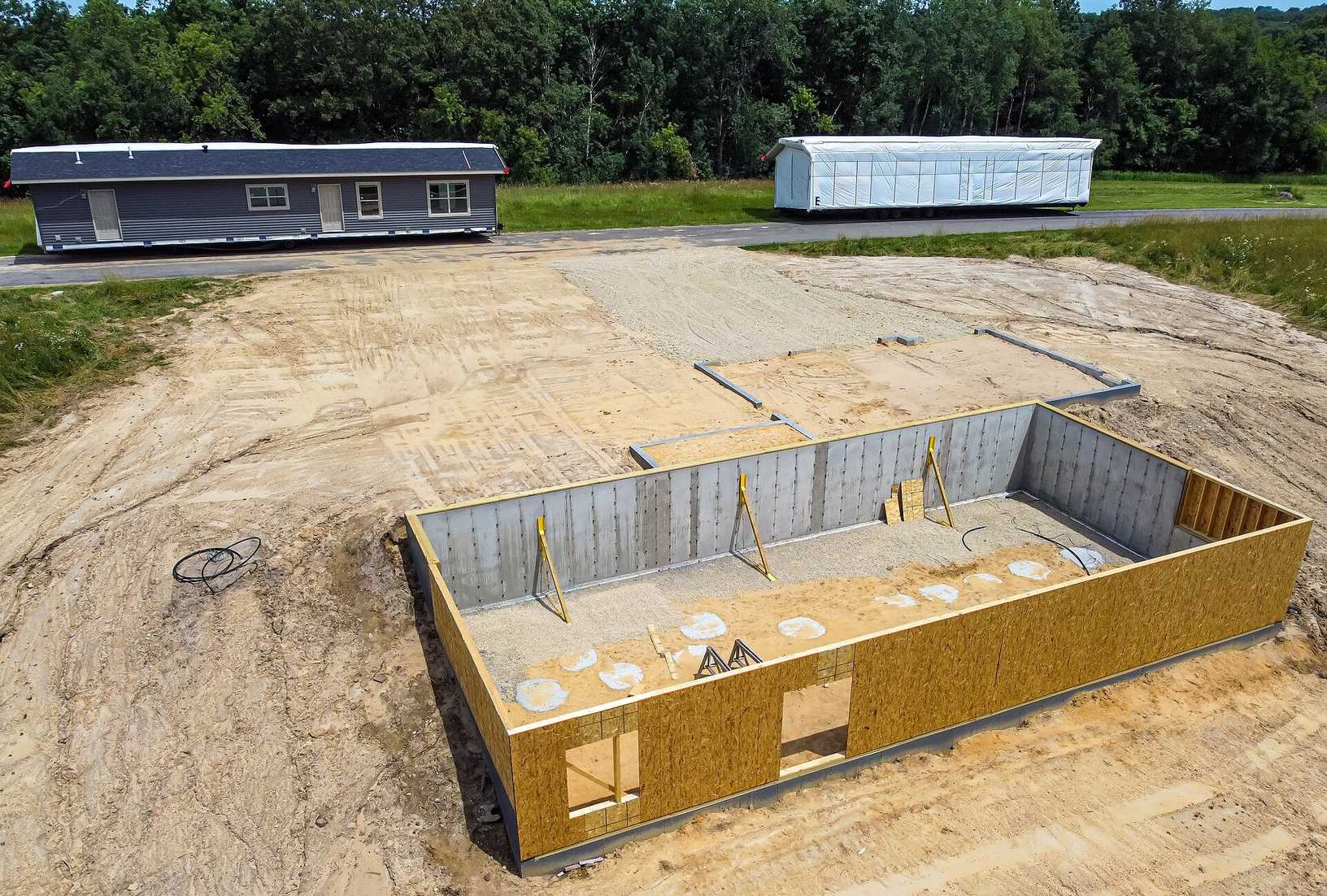
Cover: modular prefab home installation, Wisconsin, United States, July 1, 2024 · Photo by Wikideas1 · Wikimedia Commons · CC0 public-domain dedication; an illustrative photograph, not an Indonesian project site
This Issue's Verdict
Modular Buildings into Indonesia: Higher Thresholds and Narrower Paths Than You Think Classify first, then price import, certification and localization
Scope: imports and local supply of complete modular buildings, components and construction materials. Steel members, complete prefab buildings, modular mobile units, precast concrete and furniture cannot share one tariff assumption. Mandatory SNI and import controls depend on the specific product and tariff code. TKDN affects applicable procurement rules and buyer access; it is not a universal threshold on every import. Establish the product description, material, structure, assembly state, use and procurement scenario before assessing certification, tax and delivered cost for local assembly.
Three Key Numbers
75 / 10 / 15
Under Permenperin 35/2025, goods TKDN weights are 75% for direct materials, 10% for direct labor and 15% for factory overhead. Materials dominate; hiring locally alone does not determine a product's TKDN score.
Source: Articles 4-7 of Permenperin 35/2025; effective December 11, 2025
25%
Under Article 5, a principal component without a TKDN certificate may use a 25% calculation factor if produced by an Indonesian industrial company. This is neither the finished product TKDN score nor a procurement threshold. Certified components use their certificate bands; labor and factory overhead are calculated separately under Articles 6-7.
Source: Permenperin 35/2025, Articles 5-7
5 years
The supplied report cites a five-year TKDN certificate validity period. Ongoing supervision, document consistency and production changes still require management. Validity does not guarantee eligibility for a particular procurement; check the certificate and provisions before contracting.
Source: supplied report cites Permenperin 35/2025; verify the provision for each certificate
Separate Three Access Gates
Mandatory SNI depends on whether the product is listed in the applicable scope; Lartas depends on import controls and permits for the full tariff code; TKDN depends on procurement documents, buyer rules, certificate scope and score. The original estimates of 3-6 months, USD 5,000-20,000 and 1-3 months are advisory placeholders, not government fees or guaranteed timelines.
Evidence & Action
Market Access: Assess Three Requirements Separately
Materials, labor and factory overhead are scored separately75 / 10 / 15
Prepare a bill of materials, supplier-origin evidence and process map before estimating local content. Assembly in Indonesia alone does not establish the procurement score.
Production arrangements use different factorsConfirm the route first
The direct-labor factor depends in part on whether Indonesian direct production workers reach 50%; factory overhead also depends on Indonesian investment and the production arrangement. Model own-factory and contract-manufacturing cases separately under Articles 6-7.
Manage the certificate as production changesOngoing supervision
Material origin, staffing and factory arrangements should match the submitted evidence. Put certification, supervision, change procedures and records into routine operations instead of assembling documents only before tenders.
Import Costing: Classify First, Then Calculate Delivered Cost
The supplied report notes that assigning generic modular units or concrete components to tariff codes without enough product detail is unreliable. This edition uses a classification checklist. Determine the full Indonesian code from material, structure, completion, whether goods are shipped as parts, and end use. Then check MFN, ACFTA, import taxes and controls.
Product
Classification Inputs
Tax Check
Quotation Scope
Steel members
Standalone members or complete prefab building; material and use
Query by full tariff code
Clearance, port charges, inland delivery
Modular buildings
Wood or steel; assembled or parts; completeness
No universal modular-building rate
Installation, lifting and foundations
Precast concrete
Material, function and completion state
Check tariff heading and controls
Weight, handling and damage
Furniture and fittings
Material, function and separate declaration
Check origin and rate item by item
Distinguish bundled and separately declared goods
This is a classification checklist, not a product-specific tariff ruling. ACFTA preference depends on origin rules, valid proof and the applicable tariff schedule; do not assume a universal 0-5% rate.
Compliance Paths: Three Entry Strategies
Route
When It Fits
Potential Benefit
Validate Before Deciding
Import complete units
Demand validation and eligible small-volume delivery
Run a pilot with limited fixed commitments
Certification, delivered cost and buyer acceptance; do not assume all government or SOE projects ban imports
Assemble locally
Import parts, then assemble in Indonesia
May improve delivery and after-sales response
TKDN materials, factory arrangements and labor; validate order density and certification route
Make core components locally
Repeat orders and demand scale are clearer
May increase domestic inputs
Capital, utilization, certifiable materials and supply-chain management
Recommendation for Wanbang: compare pilot imports with partner assembly first. Obtain buyer requirements, complete logistics quotes and a certification pre-assessment before deciding whether local assembly wins. Do not lease a factory and hire staff before testing order density and scoring rules.
Equator's Take: Four Implications for Chinese Suppliers
Let procurement conditions guide localization★★★
Obtain the target procurement package's local-product requirements, scoring rules, accepted certificates and exceptions. The original 25% TKDN or 40% TKDN-plus-BMP thresholds cannot be applied without their governing conditions.
Establish SNI applicability before arranging tests★★★
Confirm whether the product is subject to mandatory SNI before certification. The original timing and budget are placeholders; product scope, tests, factory audit and remediation affect the quote.
Check ACFTA preference by product★★★
Verify the preferential rate, origin qualification and valid proof item by item. Keep the certificate, goods, invoice and declaration consistent before comparing preferential and ordinary landed costs.
Local delivery capability beats verbal promises★★★
Assess traceable classification advice, certification experience and site-delivery capability. Put service scope, responsibilities and project records in writing.
Red Lines (Six Operating Boundaries)
01
Do not use the wrong HS codeSteel members and modular mobile units may have different codes, rates and controls; misclassification can lead to back taxes, penalties or cargo detention
02
Never falsify proof of originThe issuer or procedure must be recognized under the applicable agreement, and the goods must match transaction documents
03
A TKDN certificate is not a universal permitIt does not replace product certification, import procedures or building approvals; manage each authority, scope and validity separately
04
Check local approvalsBuilding permits and environmental requirements can vary by locality; confirm the process where the factory or project will be located
05
Determine environmental approval before constructionEstablish the category from activity, scale and location instead of assigning every facility to the same AMDAL procedure
06
Track regulatory changes continuouslyTKDN and Lartas lists and related rules can change; assign an owner to maintain versions, certificates and change records
When This Verdict Breaks
1. Reassess when material, assembly state, tariff code or procurement rules change. 2. Replace original cost and time estimates with provider quotations. 3. Do not quote tariff ranges before classifying the product. 4. This is not a customs ruling, certification guarantee or legal opinion. Re-check the product, importer, origin, project location and tender before procurement.
Data note: this page is based on Ali's supplied bilingual report, “Indonesia Modular Building Regulations and Import Compliance.” The TKDN summary checks Articles 4-7 of Permenperin 35/2025, effective December 11, 2025. Check SNI applicability against the Ministry of Trade's current mandatory-product list; query the full tariff code, rate and Lartas conditions through INSW. Original certification costs, lead times and project recommendations are advisor estimates and were not independently audited line by line. The 25% / 40% TKDN procurement thresholds and five-year certificate validity need confirmation against the target tender and each certificate. Permenperin 35/2025: official legal record · Full regulation PDF · Trade Ministry mandatory SNI list · Indonesia National Single Window. Information checked September 25, 2026.
From Market Insight to Your Project Decision
2-hour diagnosis
约两小时诊断
Bring your product list, materials, assembly state and target procurement package. We will map classification, certification, logistics and entry routes. The first coffee is on us.