Equator ObservatoryEquator Creative Consulting
Construction & Engineering · 2026.09
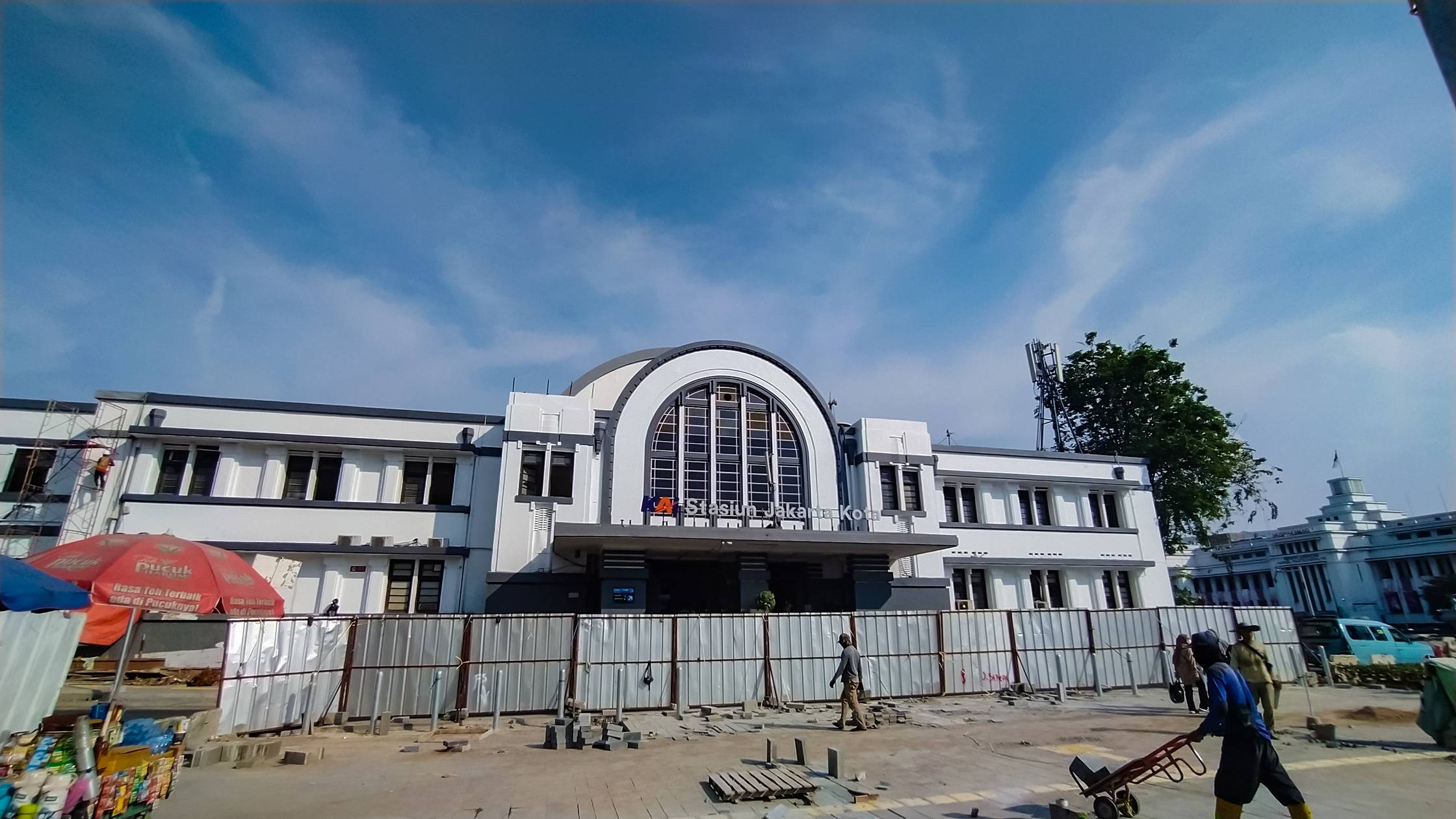
Photo: NFarras / Wikimedia Commons, construction near Jakarta Kota station (2022); cropped and resized, CC BY-SA 4.0 ·
source and attribution ·
licence. The image illustrates Indonesia’s construction environment and is not a project covered by this report.
2026 · Market Entry & Qualifications
Entering Indonesia’s Construction Market: Licences, Capital and Compliance
For Chinese construction contractors considering Indonesia · Regulatory review current through 26 September 2026
Executive view: market entry is not a matter of “getting an NIB first.” Define the legal entity that will actually perform the work, then align parent-company credentials, Indonesian construction classifications, certified personnel, local cooperation and project scope. A foreign construction representative office (BUJKA), an Indonesian foreign-invested company (PT PMA) and project subcontracting are distinct routes.
Anonymisation and scope
This public edition removes the source document’s client name, client-specific gaps and company-specific recommendations, and reframes the material as general industry guidance. Eligibility, business scope, ownership and project licences must be verified against each company’s records, KBLI, SBU and tender requirements.
Three figures that must be read separately
3 years
BUJKA NIB validity; renewal and project-level qualifications remain separate checks.
Article 276, Permen BKPM No. 5/2025
Rp2.5bn
Minimum paid-up capital reference for each PT PMA; company capital, not a government fee. Funds are generally subject to a 12-month retention rule, with statutory exceptions.
Article 27, Permen BKPM No. 5/2025; verify entity-specific application
> Rp10bn
Construction-services investment threshold uses a four-digit KBLI basis and excludes land and buildings; calculate separately from paid-up capital.
Article 26, Permen BKPM No. 5/2025
Verify the applicable entity, KBLI, location and current rules with Indonesian counsel at filing. Do not describe an investment threshold as a registration fee or paid-up capital.
Three routes: select the performing entity before mapping credentials
| Route | Use case and key gate | Verify before signing |
|---|
| BUJKA foreign construction representative office | Requires large-qualification status and an NIB; the rules require a KSO with an Indonesian construction company for the same service and equivalent qualification level. | Evidence of the parent’s qualification and track record; local partner’s SBU/SKK, work packages, liabilities, payment and bonds. |
| BUJK PMA (Indonesian foreign-invested PT) | For a longer-term Indonesian legal presence; structure it around investment and paid-up capital rules, business classification and construction-sector qualifications. | Target KBLI/SBU sub-class, foreign ownership limits, investment calculation, capital retention and ongoing compliance cost. |
| Project subcontract or technical cooperation | A qualified Indonesian contractor signs the main contract while the partner delivers a clearly defined specialist package; the actual performer must still meet applicable requirements. | Whether scope requires an entity, SBU, SKK or work permits; site control, quality/HSE, insurance, payment and claims. |
A BUJKA NIB is not an SBU, project prequalification or blanket construction permit. Actual work determines the applicable requirements; a contract label does not waive them. Check investment and ownership rules against the OSS, investment list and authorities in force at filing.
Qualification chain: six checks
| Stage | Preparation and checks |
|---|
| Parent-company records | Registration, articles, authority, credentials, finances and project references; notarisation, apostille/consular legalisation and Indonesian translation as required. Chinese credential labels do not automatically map to Indonesian qualification tiers. |
| NIB and contracting entity | Align the applicant with the contract performer, employer and party responsible on site. NIB is an identity and licensing entry point, not permission for any construction work. |
| KBLI and SBU | Map scope to KBLI 2025 and construction-service SBU classes/sub-classes. Housing, industrial buildings, warehouses, MEP and fire systems may require separate scope checks. |
| Personnel and SKK | Check technical leads, role level, experience and SKK credentials for the relevant service; separately verify work and stay permits for foreign staff. |
| SMAP and site systems | Operationalise anti-bribery management (SMAP), safety, quality and environmental controls through policies, training, reporting, checks and records. The construction authority has explained SMAP’s relationship to SBU under PU 6/2025. |
| KSO and project conditions | For BUJKA, verify same-service and equivalent-qualification requirements. The agreement should define work packages, shares, command, price, tax, bonds, variations, claims, defects and exit. |
Plan for 8–16 weeks internally, not as an approval promise
Public rules do not set one end-to-end timeline covering foreign documents, qualification mapping, KSO negotiations, SMAP/SBU and project prequalification. This is an advisor planning estimate, not a government SLA: weeks 1–2, select a route and map gaps; weeks 2–6, prepare legalisation, translations and partner checks in parallel; weeks 4–10, progress applicable OSS, personnel and SBU/SMAP steps; weeks 8–16, close project-level documentation and tender eligibility checks. Qualification gaps, document rework or unresolved partner terms may extend the process beyond three months.
Cost model: separate capital, fees and delivery cash
| Cost line | Budget treatment | Avoid this assumption |
|---|
| PMA capital and investment | List paid-up capital and the applicable investment threshold separately. Paid-up funds are generally subject to a 12-month restriction on transfer, with statutory exceptions for uses such as assets, construction and operations. | Neither is a single government registration fee; do not double-count them or overlook restrictions. |
| BUJKA and licence charges | Use the actual OSS/authority invoice and current rates; retain receipts. | Do not treat agent quotes or old schedules as a universal official price. |
| Legalisation and professional support | Itemise translations, notarisation/legalisation, Indonesian legal/tax advice and SBU/SMAP support with deliverables and milestones. | Record government charges, third-party service fees and taxes separately. |
| Local team and delivery cash | Model office, staff, insurance, training, bond capacity, mobilisation, procurement advances, retention and collection cycles. | Working capital and bond limits may constrain delivery more than incorporation costs. |
A 90-day market-entry sequence
Weeks 1–2: map qualifications
Compile parent credentials, relevant project references, technical staff and authorisations; map each item to Indonesian KBLI, SBU sub-classes and proposed work packages.
Weeks 2–4: narrow the initial scope
Select a small, supportable set of specialist services and identify the project owner, main contractor, procurement route and stage.
Weeks 3–6: verify local partners
Independently check current SBU, SKK, SMAP, project record, bond capacity and delivery resources before commercial negotiations.
Weeks 4–8: review legal and funding terms
Have local specialists review KSO/subcontract terms, foreign staff, tax, insurance, work permits and the cash plan.
Weeks 8–12: test against a real project
Use a tender, prequalification or formal RFI to test credentials and cash flow. Pause fixed investment if the proposal relies on borrowed licences, unclear liability or unverified funding.
Six compliance red lines
01No SBU rental or nominee useAlign the licence holder, actual performer, staff and responsibility.
02No blank KSODefine scope, payment, bonds, variations and claims first.
03Do not confuse NIB with construction eligibilityCheck SBU, personnel and project requirements separately.
04Do not ignore foreign-staff rulesVerify work and stay permissions before deployment.
05No opaque facilitation paymentsReject false references, gifts, bid collusion and unrecorded payments.
06Recheck changing requirementsUse OSS, LPJK and tender documents current on filing date.
Primary official sources
Scope and disclaimer
This report synthesises public rules and agency materials for early-stage commercial assessment. It is not legal, tax, tendering or investment advice. Licensing and investment rules may change; company eligibility, ownership, cost and timing must be confirmed in writing by Indonesian specialists for the actual business and project scope.
From Market Insight to Your Project Decision
Indonesia market-entry review
Credential mapping · partner structure · project scope
Bring the target work scope, project stage and current credentials to map entry routes and open checks.
See & Book the Diagnostic →Join the Equator Observer Circle
Indonesia projects & industry updates
Get updates on Indonesia projects and industry research.
See contact detailsYour Take
PT EQUATOR CREATIVE CONSULTINGJAKARTA · www.equatorcreative.com