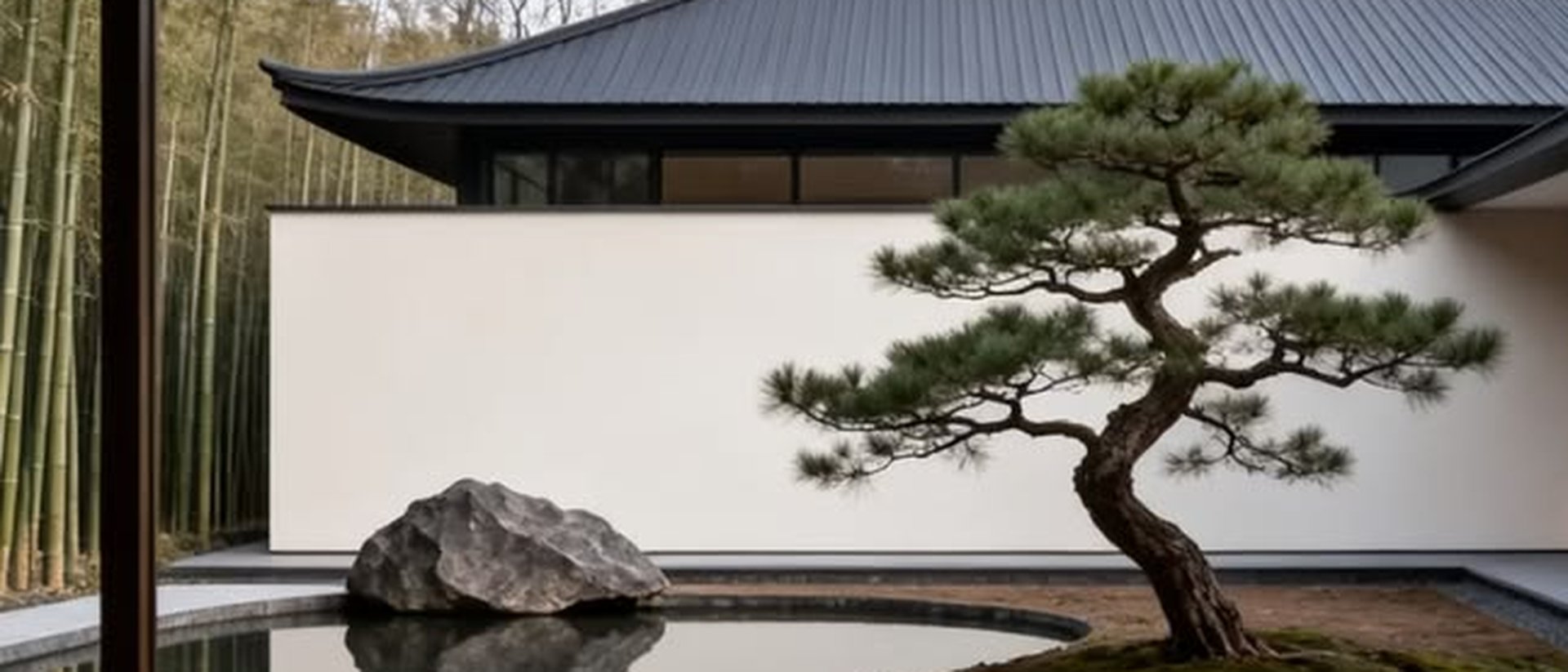
The courtyard has a market in PIK — but what sells is not the architecture. It is cultural identity and family order.
Sell the family a courtyard that transmits order. Sell the new migrant a courtyard that settles homesickness. Sell the young a courtyard that performs identity. Do not break ground before the translation is done.
Three Numbers
10M
Ethnic Chinese number roughly 10 million in Indonesia — 3–4% of the population — yet nearly all major conglomerates are Chinese-family owned. Effective demand for trophy property overlaps precisely with the courtyard's target buyers.
Source: common academic & media estimates, 2026; wealth concentration cited as a qualitative judgment
80
Pantjoran Chinatown packs about 80 merchants and sells out on holidays — "Chinese" is a proven traffic asset in PIK. But it only delivered the public performance of identity, not private ownership of it.
Source: Pantjoran PIK public coverage and visitor reviews, 2026
≈10 yrs
Counter-evidence: Suzhou Taohuayuan's 351 villas took nearly a decade to sell; Babukou has just 6 units. Ultra-luxury courtyards are a micro-niche everywhere — a pure-residential cash-flow model likely fails in PIK.
Source: Courtyard Property Project Compilation, Aug 2026
Four Buyer Segments (Cultural Literacy × Purchasing Power)
Segment
Profile
Real buying motive
Playbook
A · New migrants
Expat executives of Chinese firms; mining / new-energy / e-commerce founders, based in PIK
Homesickness + business hospitality + identity anchor
Tell the Suzhou Taohuayuan story directly — no education needed
B · Local Chinese dynasties
Business owners aged 50–70, family conglomerates
Family mansion, ancestral hall, homes for married children, a totem of succession
Sell "a space for family order" — enter through feng shui
C · Young Chinese-Indonesians
Under 35, Pantjoran's core crowd
Won't buy soon — but will rent: shoots, private dinners, events
Distribution engine + venue cash flow
D · Non-Chinese elite
Indonesian tycoons, foreign executives
Exotic luxury — real but sensitive
Not a primary target; approach with care
The right order: use C to amplify, A to validate, B to close. Source: Market Feasibility Study of Chinese Courtyard Products in PIK, Table 2, Aug 2026
When This Verdict Breaks
① The narrative crosses the ethnic-politics red line — any high-profile "Chinese-style" enclave risks being read as an ethnic enclave; the framing must be "Nanyang Chinese heritage", never "China". ② Segment B broadly concludes that buying land and self-building beats buying your product — customization must prove it sells a building system, not bricks. ③ The cash-flow model fails a worst-case stress test of a 5–8 year sell-out.
Evidence & Action
Three-Step Roadmap (stop on any failed step)
Months 0–18 · The venue prototype: one courtyard, not a compound★★★
An 800–1,500 sqm hybrid of private dining, tea space, business hospitality and cultural exhibition — held via Hak Sewa lease or PT PMA, in the southern U-shaped form. Success: break-even at venue level within 12 months of opening; 30+ deep profiles of Chinese family clients.
Months 18–36 · Bespoke corporate clubhouses: monetize willingness to pay★★
Sell "one seat, one courtyard" custom clubhouses to Chinese corporate HQs and family businesses — reception, family council, ancestral hall, private dining. Success: 5–8 seats sold, with unit prices accepted inside PIK's Waterfront Luxury band (IDR 20B+).
Months 36+ · The family courtyard enclave: small-batch close★★☆
An 8–15 seat micro-enclave, only for Chinese-Indonesian families with citizenship (sidestepping the title constraint) — a graft of southern courtyard onto Nanyang shophouse, operated with a membership clubhouse. Never mass-produce. Success: over half of seats locked at pre-sale.
Four Legal Paths for Foreigners Holding Indonesian Property (design the product by title path, per segment)
Path
Term
Prerequisites
Implication for this product
Hak Pakai (Right to Use)
Up to 80 yrs (30+20+30)
KITAS/KITAP permit; landed-house floor ~IDR 5B in Jakarta; one unit, owner-occupied
Main channel for Segment A — but "use, not ownership" discounts willingness to pay
Hak Sewa (Long Lease)
Typically 25–30 yrs, renewable
No residency requirement; pure contract
The optimal structure for the venue prototype — lease first, buy later
PT PMA holding HGB
Up to 80 yrs
Foreign-investment company; paid-up capital from IDR 2.5B
The compliant vehicle for corporate clubhouses — can operate and hold
Hak Milik (citizens only)
Freehold
Indonesian citizens
Native fit for Segment B dynasties — another reason they are the endgame buyers
Speak only "Nanyang Chinese heritage"Follow the Pantjoran frame: Peranakan, shared history. Never "China".
02
Lean visually toward Minnan shophousesThe native memory of local Chinese — not Beijing imperial style; put Indonesian partners frontstage.
03
Never mass-produceScarcity is the only pricing anchor — 351 villas at Taohuayuan, 6 units at Babukou.
04
Venue first, property secondBreaking ground on residences first = betting the biggest chip on an uneducated market.
05
The equatorial maintenance billTimber and tile upkeep may run 2–3× China's; substitute materials dilute the scarcity narrative — draw the line early.
06
Cash flow designed for the worst caseLong family decision chains and high ticket sizes — stress-test a 5–8 year sell-out.
Study Limitations (stated plainly)
Real transaction data for PIK trophy property is not public; Segment B sizing is inferred from wealth structure, not measured. No rent-to-price or per-sqm efficiency data exists for Pantjoran. Ethnic-political sensitivity cannot be quantified — run small-scale narrative tests early ("Nanyang courtyard" vs "Chinese siheyuan"). No authoritative statistics exist for the size of Segment A. This report is strategic research, not investment advice or legal opinion; for title and tax matters, consult a licensed PPAT notary and professional counsel in Indonesia.
2-hour diagnosis
两小时诊断
Beyond the verdict: we help you decide your entry path. The first coffee is on us.