Indonesia Cold Storage Special · Aug 2026 · Layout V4
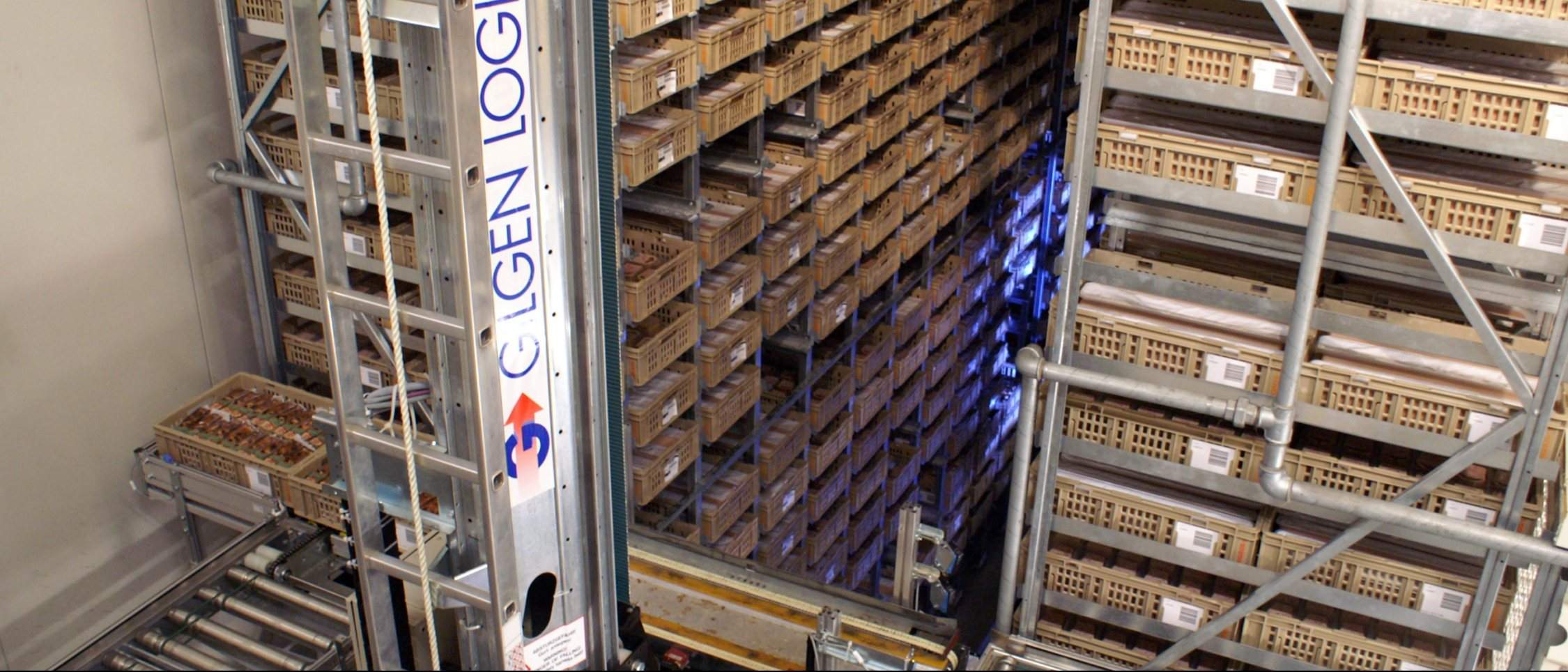
Photo: automated small-parts cold store (AS/RS) · by Logistic GmbH · via Wikimedia Commons · CC BY-SA 4.0
This Month's Verdict
Government-built cold stores sit idle in the sun — while capital scrambles to buy in. The gap isn't capacity; it's three missing links.
Indonesia's cold-chain logistics market is about USD 7.19bn in 2025, with real, structural demand growth. But the true structural gap is not total cold-storage capacity — it is three overlooked links: halal-compliance retrofits (the Oct 17, 2026 mandatory deadline for imported food), origin-side pre-cooling and fishing-port cold chains (donated government cold stores sit idle for lack of operations), and high-efficiency refrigeration (electricity is the single biggest operating cost). Capital is buying the “warehouses” and the “chains” — only the equipment & engineering layer remains unconsolidated. That is the vacuum belt for Chinese refrigeration and cold-storage engineering firms.
Three Numbers
$7.19bn
So what: Indonesia's cold-chain logistics market is ~USD 7.19bn in 2025, forecast at USD 9.24bn by 2031; frozen food is USD 3.38bn in 2025 heading to USD 5.01bn by 2031. Whichever yardstick you pick, the direction agrees: 4%–10% growth — the dispute is over the base, not the direction. Cold-storage facilities & equipment (~10%) outgrow logistics services (4.23%) — equipment & engineering firms have more upside than operators.
So what: fish & seafood is the top cold-chain application at 42.25% (frozen holds 57.35% of temperature zones) — Indonesia is the world's second-largest fishery producer, and end-to-end freezing from landing to container gate is the hidden threshold for shrimp and tuna export eligibility. The real gap is the “first mile at origin”: port pre-cooling, quick-freezing, on-board refrigeration — not city-side warehousing.
Source: Mordor Intelligence, 2025. Compiled by Equator Creative.
20 yrs
Counter-evidence: a government-donated cold store in Takalar, South Sulawesi, built in 2002, sat idle for 20 years over technical and standards mismatch; even after a 2022 restart, utilization stays low — fishermen lack post-harvest capability, so the warehouse exists but the chain doesn't turn. What Indonesia lacks is not the physical shell of cold storage, but the design, reliability and operating capacity that make it work.
Source: Jurnal Mediasosian Vol.10(1), 2026
How big is the market: cross-checked across yardsticks, no fake precision
Institution / scope
Base size
Forecast
CAGR
Mordor Intelligence|cold-chain logistics (storage + transport + VAS)
Sources: the respective institutions, 2025–2026. The scope gap is itself information: broad vs. narrow yardsticks differ more than 4×, meaning vast cold-chain assets sit inside retailers' and producers' own systems — third-party penetration still has room to rise.
Temperature zones: frozen (-18°C and below) holds 57.35% of cold-chain logistics (2025), consistent with Indonesia's top-tier fishery status; deep-frozen (below -25°C) and pharma-grade zones are the fastest-growing niches. Applications: fish & seafood lead at 42.25%; pharma & biologics grow fastest (CAGR ~6.21% to 2031). Regions: Java holds 62.10% of the national market around the Greater Jakarta cluster; Sulawesi grows fastest (tuna/skipjack exports); eastern regions like Maluku and Papua are constrained by power reliability.
Source: Mordor Intelligence, 2025–2026
When This Verdict Breaks
① If Greater Jakarta's east-corridor cold-store vacancy is still below 10% with rents rising at end-2027, demand absorption is stronger than this verdict assumes — “enter cautiously” should become “enter faster”. ② If by April 2028 BPJPH/ARPI issue no warehouse-level halal rules and no new halal-dedicated facilities register, the halal-driven retrofit logic fails. ③ If frozen-food CAGR runs below 4% for two consecutive years, or sharp IDR depreciation suppresses consumption, the premium logic for efficiency and halal design breaks — the market reverts to “basic frozen storage + price war”. ④ This verdict applies only to equipment, engineering and O&M — cold-storage real-estate investors must price the supply-glut cycle separately.
Evidence & Action
Electricity is the pipeline: efficiency is not ESG talk — it's the customer's 5-year TCO
Refrigeration accounts for 60%–70% of a cold store's energy use; electricity is about 15%–20% of operating cost, and 5-year power bills can reach 1.75–2× the equipment purchase price. Indonesian C&I tariffs run ~USD 0.10/kWh; eastern islands suffer weak grids with widespread diesel backup. Under these conditions, “high-efficiency units + solar coupling + smart energy management” decides the customer's 5-year TCO — academic work has proven a PV-plus-grid hybrid economically viable for a 200-ton fishery cold store in West Java, and the government's eco-fishing-port policy explicitly deploys solar cold storage. This is a harder differentiation than “cheap”: you're no longer selling equipment, you're selling refrigeration per kilowatt-hour.
Sources: Flandcold technical team (citing IIR/EIA data), Apr 2026; MDPI Processes, Nov 2021; Equator Creative Indonesia Cold Storage Report §3.5
The fastest engine isn't appetite — it's compliance: the halal timetable now has teeth
Indonesia's Halal Product Assurance Law (UU 33/2014) phases in mandatory certification, turning cold chain into compliance infrastructure. BPJPH's administrative-sanction rules took effect June 5, 2026 (a ladder from warning to fines, license revocation, delisting, suspension and public naming), and BPJPH has publicly ruled out any further extension of the October 17, 2026 deadline. Halal audits target not recipes but physical segregation across receiving, storage and production — halal and non-halal products must not be stored or transported together.
Physical halal/non-halal segregation is already mandatory
Imported F&B, ingredients, cosmetics, traditional medicines & supplements, Class A medical devices
Oct 17, 2026 (BPJPH: no further delay)
Importers and cold stores must prove end-to-end segregation; the retrofit window
OTC drugs, Class B medical devices
Oct 17, 2029
Pharma cold chain stacks halal on top of existing compliance
Prescription drugs, Class C medical devices
Oct 17, 2034
Long-term certainty of demand
Sources: UU 33/2014, PP 42/2024, BPJPH announcements and WTO notification G/TBT/N/IDN/187. Transmission mechanism: existing cold stores need zoning retrofits (separate rooms, separate evaporator circuits, separate flows); new builds must embed halal segregation at design stage — a retrofit-plus-newbuild market ramping from October 2026, where almost no equipment/engineering firm yet sells “halal-compliant design” as a product. The first mover defines the category.
The real competitive map: the warehouses and chains are bought — the equipment & engineering layer is a vacuum
Capital timeline: Mitsui took a stake in Pangan Lestari in Oct 2023; CRE acquired the Narogong cold store east of Jakarta in 2024; in 2025 Astra International — Indonesia's largest conglomerate — bought ESR's Cikarang logistics parks phases I&II (~113,700 sqm, ~IDR 1.3tn) and the listed cold-storage landlord Mega Manunggal Property; Lineage, after its USD 4.4bn IPO, acquired ColdPoint for USD 223mn to expand in Southeast Asia. Meanwhile in the equipment layer: Bitzer, Danfoss and other European/Japanese brands sell components but not engineering; local refrigeration contractors are fragmented and lack large-project design capability; Chinese appliance giants like Midea go the consumer route and don't touch industrial cold storage. At the level of “large cold-store EPC + industrial refrigeration + automated warehouse integration”, Indonesia has no strong consolidator — a Chinese engineering firm has already proven the path with local service teams, pharma-grade precision and an e-commerce AS/RS case. The vacuum is real and Chinese firms can enter — but the window won't stay open.
Sources: IDNFinancials, Aug 2025; Mordor Intelligence, Mar 2026; GMI Research, Jun 2026; Freezepro, Jan 2026. Compiled by Equator Creative.
Five Entry Modes
Mode
Investment
Control
Stage
Pure export (ship from China)
Low
Weak; no after-sales
Testing only — no more than 6 months
Local agent / distribution
Low
Weak; brand equity accrues to the agent
Months 0–12, transitional
PT PMA trading + technical-service entity
Medium
Strong
Months 6–18 — the main recommendation
JV assembly (localized panels + imported units)
Medium-high
Fairly strong (pick the right partner)
Months 18–36
Full local manufacturing
High
Strongest
After month 36, volume-dependent
Source: Equator Creative Indonesia Cold Storage Report §7.1. Recommended ladder: agent → PT PMA → JV assembly — each rung gated by order validation from the previous one. The dumbbell structure: keep importing compressors and units (using China–ASEAN FTA / RCEP rules of origin to cut tariffs), assemble insulated panels locally (TKDN easily exceeds 40%, unlocking government-procurement priority), and run engineering EPC locally.
Opportunities by Priority (as of Aug 2026)
Halal-segregated multi-temperature EPC package★★★
The mandatory retrofit wave driven by the Oct 17, 2026 deadline: zoning retrofits for existing stores plus segregation embedded in new designs. Package SJPH segregation requirements (separate rooms, circuits, flows, status labelling) as a standard product — turning regulation into a selling point. The first mover defines the category.
Paid by government budgets and international aid (FAO, World Bank and ADB all run relevant project pools) — the cure for “cold stores sitting in the sun”. Makassar / Bitung are the demonstration battlegrounds: use one lighthouse project to tap policy funding, no heavy assets up front.
Ride the new capital: get onto the vendor lists of Astra / Lineage / CRE★★
The new owners (property conglomerates, REITs, international logistics groups) buy on TCO and auditable compliance records, not lowest bid — precisely the customer profile for high-efficiency Chinese equipment plus turnkey engineering. Get on the list, and replication becomes wholesale.
E-commerce is the fastest channel (projected 21.4% of retail by 2027), and Chinese AS/RS-plus-WMS integration is already proven in market. Enter as the equipment & engineering supplier, not the owner — property capital is swarming this track.
Pharma-grade validated cold rooms (mid-term)★
High margin, high barriers, low price sensitivity (±0.5°C validated control); halal coverage of OTC drugs from 2029 adds another moat. But GMP/GDP references are required — build food-grade cases first, start after 2027.
Red Lines
01
Betting on the “cold-storage shortage” narrativeThe mainstream story describes 2015–2022 Indonesia; idle government stores plus aggressive capital-led supply is the 2026 reality — if you reject this correction, run every strategy at half throttle
02
Stocking for a single halal-deadline scenarioDeadlines have slipped before — plan inventory for both “no delay in 2026” and “12-month delay” scenarios
03
Unhedged FX exposureIDR depreciation risk is medium-high — quote in USD, add exchange-rate adjustment clauses, hedge with local procurement
04
Building the plant before landing the ordersWhen local assembly can't reach scale economics, the offshore plan B of “made in Thailand, engineered in Indonesia” may win — gate every upgrade on order validation
05
Ignoring payment terms and receivablesDeposits plus sight L/Cs for small and mid clients; milestone-based payments for large projects
06
Underestimating vertical integration by the giantsIf Astra / Lineage build in-house equipment maintenance teams or bind exclusively to one compressor brand, independents get squeezed out — differentiate into their vendor lists early, so you're inside the gate when consolidation happens
2-hour diagnosis
两小时诊断
Beyond the verdict: we help you decide your entry path. The first coffee is on us.
Data note: market sizing, structure, capital moves and policy figures are drawn from Mordor Intelligence, MarkNtel Advisors, GMI Research, USDA, IDNFinancials, BPJPH announcements and WTO notifications, among other public sources; verdicts and opportunity assessments are Equator Creative's independent analysis and do not constitute investment advice. Known blind spots: no authoritative public data on east-corridor rents and vacancy (the largest gap), top operators are private with no public financials, warehouse-level halal rules are still evolving, and government project pools are unquantified — calibrate confidence accordingly.